Math Clips Addition Matching Game

steam activities header

Our STEAM Subject today is MATH!

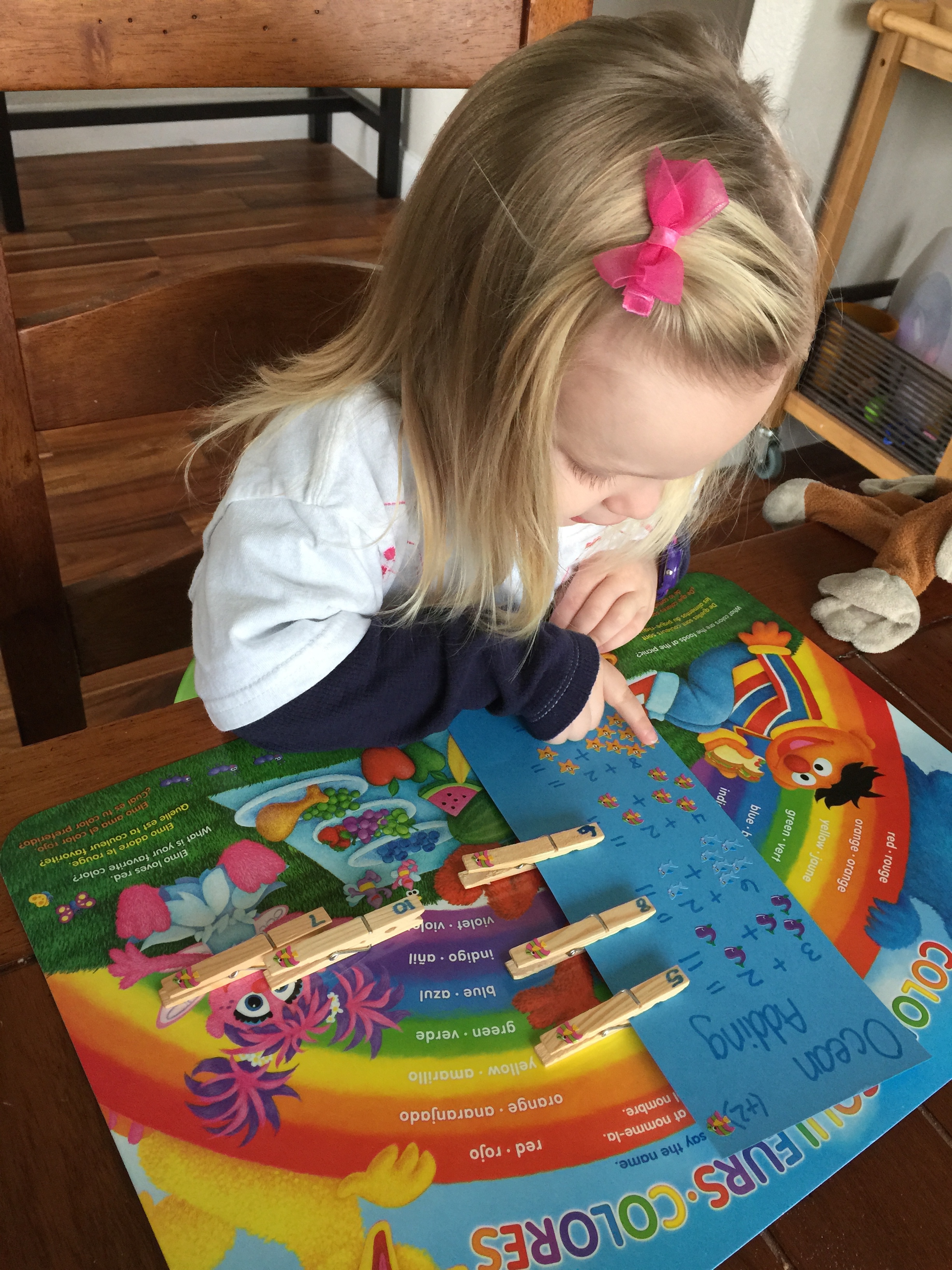
There are SO MANY times that I get frustrated.  It’s really hard to be the mother of a gifted child who is VERY asynchronous in her development.  I see all these adorable activities on Pinterest that are age appropriate for her, but they are color matching.  Or they are shape sorting.  And while those activities might be fun and totally appropriate for 98% of her peers, they aren’t appropriate for Becca.  She doesn’t like to do things that are too easy.  The girl wants to be challenged.  A lot.  And that’s fabulous.  But, it does create quite a frustration on my part.  She is super into math.  She wants to add and subtract food from her plate (which we do frequently).  She wants to add and subtract shoes from the shelf (which we also do frequently).  But addition and subtraction activities without manipulatives usually equal a worksheet, which she HATES doing.  And I don’t blame her.  Worksheets remind her that she can’t write yet.  And then she gets frustrated.

So, I’ve been wracking my brain to come up with some ideas for games that are similar to those color matching / shape sorting type activities, that cover the skills she’s ready for.  Enter my

math clips

I had a bunch of little ocean stickers, so mine are ocean themed.  You could do conversation hearts for Valentines day, or stars, or dinosaurs – whatever you have of the little tiny incentive chart stickers.  Note: your child may not need the stickers to count.  Becca doesn’t use them some of the time.  But they make it more age appropriate and fun!  Plus, it’s always good to have that visual reminder of what 8 starfish look like, what 7 turtles look like, etc.  I also put a sticker on the end of the clothespin so that the answers for each card can easily be matched to the correct card if they are all stuck in a large Ziploc bag together.  I did +2 and +3  with answers 5 and above.  But if you have more stickers and use a larger sheet (I just cut one piece of card stock in half lengthwise), you could easily do larger numbers.  Or, you could do much smaller numbers if your child isn’t quite ready for the big answers, and/or is still needing to sit and count each sticker to get to the total.  I love how easily this activity can be modified to fit the needs of the child.  And honestly, wouldn’t this be a fabulously fun activity for 1st graders learning addition as well?

IMG_2395 IMG_2396

Note: clothespins can be very challenging for a child who struggles in the fine motor department.  Becca has had lots of practice and still has trouble – especially since these are on the right side of the paper and she is left-handed.  If your child is struggling with the clips, it helps if you hold the card for them so that all they have to worry about is putting the clip on.  They may also need you to hold their hand to help them squeeze if their pincer grip isn’t very strong.

Ocean Habitat

This month I’ve been talking on Tuesdays about our animal habitat boxes.  Hard to believe we’ve just got one more week in this series!  I hope you are enjoying the ideas I’ve been sharing.  If you’ve missed any of them, here are the links:

Arctic/Antarctic Habitats  –  Dinosaur Habitat  – Farm Habitat

So today is the Ocean!  Becca’s favorite habitat.  She is obsessed with learning more and more about the ocean.  She loves watching Octonauts on Disney Jr, reading ocean books, and of course, taking care of our tank of saltwater marine life.  She would live at Sea World if she could.

The best part about these habitat boxes for me is that they take about three minutes to throw together.  And for a Mommy who works from home, that three minute prep for an activity that will occupy her for 20+ minutes, is GOLDEN.  So here’s what you’ll need:

colored rice (I used the blue and green rice mix that we already had together from our Colored Rice Sensory tray activity – KEEP everything, Mommy.  Just throw it in a bag when your kiddo is “done” and pull it back out a couple months later.  Keep everything.)

a storage box

Safari Ltd Toob (here are a couple great options):
Safari Ltd Ocean TOOB

Safari Ltd Coral Reef TOOB

Safari Ltd Baby Sea Life TOOB

Extension – get this Toob and make it be a shark box! Safari Ltd Sharks TOOB

A different idea for your older child learning about the various levels of the ocean – color your rice black and purple and get this Toob: Safari Ltd. Deep Sea Creatures

IMG_2165


Colored Sensory Tubs

baby bees header

Now that I do all kinds of interactive sensory bins for Becca, I had to really dig deep to remember how I started with her.  There’s a picture of 8 month old her floating around Pinterest playing with her very first sensory bin… and sadly, the link is broken because my old blog doesn’t exist anymore.  But, it’s a super cute picture, and hopefully the picture alone has given lots of moms ideas.  It brought me back to my “roots” of how to start for him.

It’s as simple as sorting your Baby Bees’ toys by color.  If you’re like us and have an older child, you probably have a MILLION baby toys that your Baby Bee has “adopted” from their older sibling(s).  And then there are the Christmas presents that just never seem to stop, that equip your Baby Bee with even more toys they probably don’t need.  So, take all those excess of toys and turn them into a learning experience!!!

Don’t have an older child and an over abundance of toys?  Just wait!  HA! No, seriously, what I did for Becca was to sort her toys, and then I added additional things that were ok to go in her mouth – like long strips of colored ribbons and fabric tied together into a large knot.  Think dog chew toy.  Seriously, ya’ll, it works for Baby Bees, too.

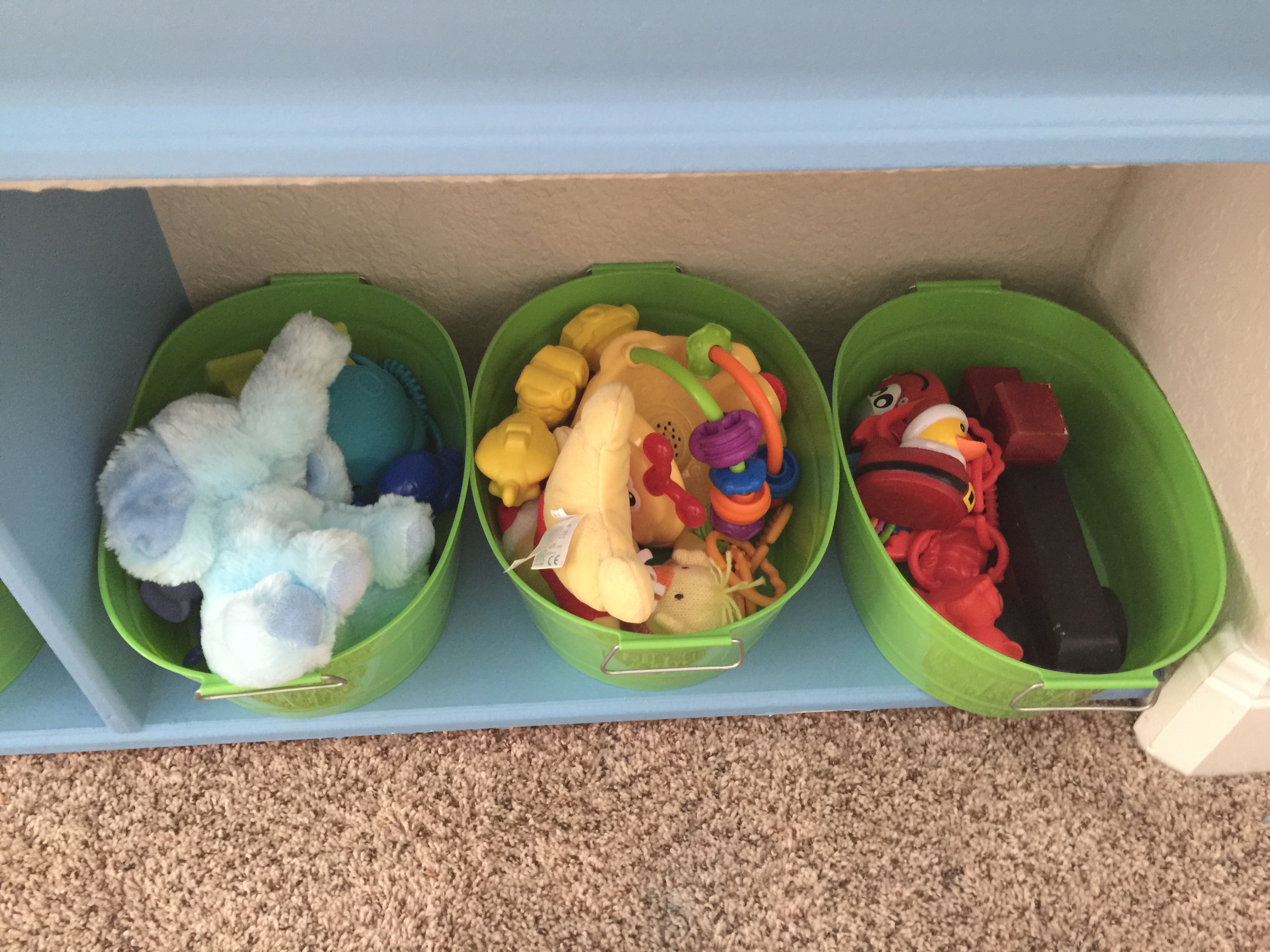
So, you’ve got all these toys to sort.  What to put them in?  Well, you probably know that I’m a huge fan of Dollar Tree.  Get some of their little colored buckets to help you organize.  Then the great thing is, the toys are organized, too… plus they are sensory bins!  Double bonus!!

IMG_2355

Right now, Grayson’s color sensory tubs are for blue, yellow, and red.

IMG_2356 IMG_2357

The rest of his toys are also organized in Dollar Tree bins – I especially love the big basket I found for all of his cloth books, which are never organized and needed something larger to just throw them in so they stay off the floor!

As an extension for play for an older sibling, have him or her help you sort the toys.  Let your Big Butterfly help you sort them by color, deciding which color is most prominent on that toy.  Your Big Butterfly can also select which color your Baby Bee will play with – and encourage Big Butterfly to talk to Baby Bee about the color, and point to that color if the toy has multiple colors on it.  If your Big Butterfly is anything like mine, they’ll love the challenge.  Becca is all about teaching Grayson things.  She’s quick to say, “Look, Brother, this is yellow.  And this is yellow.  But Pooh’s sweater is red.  And so is his hat.”  It’s also a great extension to the activity to have Big Butterfly help clean up – remembering to sort the items into the correct bucket.

After they’ve been sorted by color for a while, get creative – sort into soft and hard, or noisy and quiet… so many ideas for using those toys!!

And again, if you don’t have a million toys, first, praise God!  (Seriously, ya’ll, I think we have toys coming out of our ears!!)  Second, look for things around your house that would be safe that you could add to the toys you do have. Do you have colored washrags?  Do you have colored plastic bowls or plates that perhaps your Baby Bee isn’t ready to eat off of just yet?  Look for items at Dollar Tree that could be considered “toys” now, and could grow with your child – like colored plastic cups that for now can be a toy and later they can drink out of.  Or those little plastic measuring cups that right now they can just chew on, but later they can use in a sensory bin and then later use to learn about measuring.  If you feel your Baby Bee is lacking in soft stuffed animals, Dollar Tree also has a million of those… or we could donate a few to your cause. 😉  Remember, however, that with your Baby Bee, less is more.  You don’t need a box of 30 red items.  5 is plenty.  Ideally, they’ll have different textures, weights, etc, but even if you have five identical items, it’s all good.  The focus is to introduce colors.

As your Baby Bee gets a tad older, you can begin providing two tubs to play with, and see if your Baby Bee gravitates toward one color or the other, and see if Baby Bee can put the items back in the bucket.  (At 7-9 months Baby Bee should be really awesome at pulling everything out of the bucket, and may begin to start setting things back inside closer to the beginning of the 10th month.  Don’t expect color sorting til Baby Bee is much older – for some Baby Bees, color sorting between two colors won’t happen until well after Baby Bee’s first birthday.  Remember always – every Baby Bee is unique and different!)

IMG_2350 IMG_2346

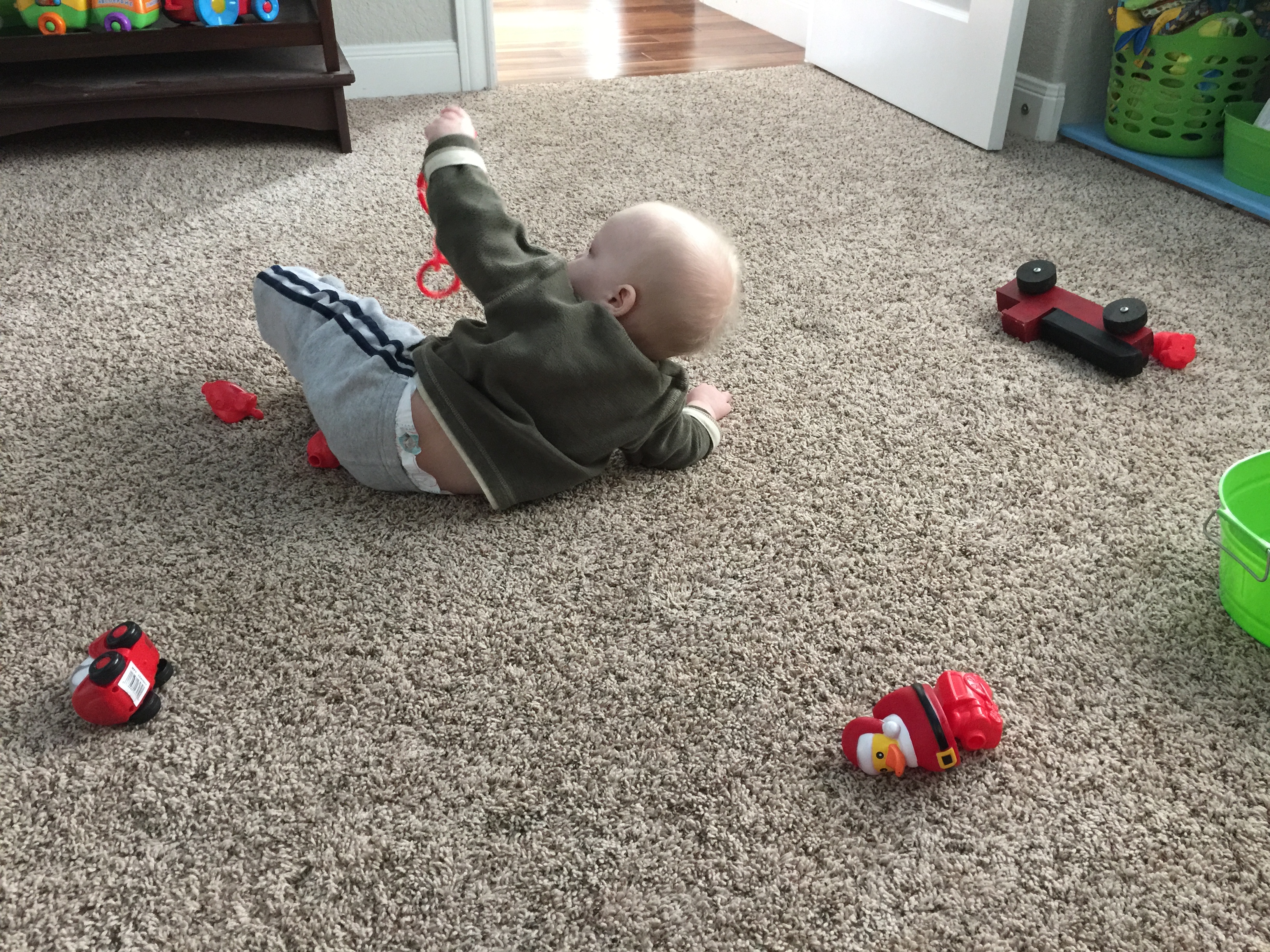
Colored sensory tubs are a great way to keep your Baby Bee happy during tummy time, and encourage Baby Bee to keep reaching for toys, trying to crawl, and practicing rolling!

Supporting Your Lefty

supporting your lefty

A conversation recently came up over on my Facebook page about how to support a left-handed child – especially when that child might be the only one in the family who is a lefty.

I myself am right-handed.  But Cody is a lefty, and so is Becca.  Time will tell which hand Grayson will prefer.  There’s a lot of research out there on the topic, and it seems from what I’ve read, that noone really agrees on when a child has actually made the final decision about which hand they will use.  Some of those “experts” would say that you can’t possibly know until a child is 5, 6, or 7… while others say you usually know by 18 months, and others say even before that.  But anyway, how do you help that left-handed child in a world made for right-handed folks?  (All research agrees that only 10% of the population are left-handed.)

It can be a challenge.  MOST “touchy-feely” books only have the feeling spots on the right side.  Desks for school children are made to support a right arm.  Most spiral notebooks are bound on the left side.  Scissors are often hand specific.

But take heart!!!  Mirrors are a fabulous thing.  It’s also great to sit across from your child to model something for them – so they are looking at your mirror image.  And, I have noticed that Becca tends to use her right hand for some things simply because that’s what she’s seen me do over and over, and it’s easier to mimic.  Cody says that he uses his right hand a lot for things, too – including his computer mouse at work – simply because that’s the way the world works.  I think left-handed folks end up having to be more ambidextrous than those of us who are right-hand reliant.  I can do a lot with my left hand, but I don’t hardly ever lead anything with my left hand.  Becca can use both hands fairly well.IMG_0422

When teaching her to eat with a spoon, and also to pour water, we talked about with hand is her strong hand, and which hand is her helper hand.  Her strong hand holds the spoon or the pitcher handle, and her helper hand holds the bowl/pitcher to keep it steady.  By using “strong hand” and “helper hand” I didn’t ever slip and say left and right and end up mixing them up.  She has a very good grasp of left vs right, and has for a long time, so it’s been very important to me to explain to her that everyone has a “strong hand” and a “helper hand,” but for some people one is the left and the other the right, or visa versa.  She has the example of Mommy and Daddy having different “strong hands” to look at.  If you don’t have another lefty in the family, it’s a great way to talk about the concept of how everyone has strengths and weaknesses in their physical abilities, and that we use our bodies sometimes in different ways.  (Also note – a left handed writer isn’t always a left-footed kicker!  Becca is definitely right footed.)

So, that’s my two cents.  The rest of this post is a compilation of websites that I’ve found that have information about having a left-handed child.  Some of them are from researchers, some are just from ordinary folks like me and you.  So, be sure to view the information at the top of the page when you visit the link so that you know how much stock you want to put in what that particular source is sharing.  I am also listing at the bottom several helpful products from Amazon that you might want to purchase to help your left-handed child.  Those products are all affiliate links, and I appreciate your purchases! 🙂

Not sure which side is dominate?  Check out these simple tests from http://www.childcarequarterly.com/spring07_story3.html
“Eric Chudler, University of Washington, has a Web site called “Neuroscience for Kids.” It includes games, quizzes, and links to brain development and function. The following activities are adapted from his work. Each activity offers school-agers opportunities for charting and graphing, surveying, and evaluating evidence. Have plenty of chart paper and markers on hand. Encourage children to make notes of their observations. If your classroom has Internet access, children can upload their data and exploration results.

Left hand or right hand? 
Rather than ask children which hand they use, set up observation experiments that rely on more than self-reporting. Prepare observation charts with three columns: Left Hand, Right Hand, Either Hand. Have observers chart peers in tasks such as using a fork, painting at an easel, turning a door knob, and throwing a ball. 

Left foot or right foot? 
Set up the same observation system as in the previous activity. Have observers chart their peers in tasks such as kicking a ball, walking up stairs (Which foot steps first?), time spent balanced on each foot, and stepping on a picture of a cockroach.

Left eye or right eye? 
Check for eyedness. Chart these tasks: looking through a paper tube, looking through a magnifying glass, and winking (Which eye winks more easily?). 
You can chart eye dominance too. Cut a coin-sized hole in a sheet of construction paper. Ask the subject to hold the paper and look through the hole at a distant object using both eyes. Ask the subject to bring the paper closer and closer to the face while still looking at the object. As the paper comes close to the face, only one eye will be looking through the hole. Which one?

Left eat or right ear? 
Chart which ear is preferred in different tests. Which ear does the subject cup to help make a whisper louder? Which ear does the subject hold against a small box when trying to determine what’s inside? Which ear does the subject hold against a door to hear what’s going on outside?”

Lefty Links:
http://www.childrenshealthnetwork.org/CRS/CRS/pa_lefthand_pep.htm

http://www.lefthandedchildren.org

http://www.parents.com/kids/development/physical/raising-a-left-handed-child/

http://www.education.com/magazine/article/Left_Left_Left_right_Left_Tips/

Lefty Products From Amazon:

Fiskars 5 Inch Left-handed Pointed-tip Kids Scissors, Color Received May Vary

Kona K2LTSB Left-Handed Acoustic Electric Dreadnought Cutaway Guitar in Tobacco Sunburst Finish

Razer Naga Left Handed MMO Gaming Mouse

Le Creuset Revolution Silicone Left Handed Saute Spoon, Marseille

Westcott School Kumfy Grip Left Handed Kids Scissors, 5-Inch, Blunt, Colors Vary (13594)

Roaring Spring “Lefty” Notebook, One Subject with 1 Double Pocket, 11 x 9 Inches, 100 sheets, College Ruled, Assorted Color Covers

EasieEaters Curved Utensils – Left-handed Utensils without Shield

I’m Left-Handed What is Your Super Power? Lightning Bolt Navy T-Shirt

TOPS Lefty Kraft Cover Notebook, 9 x 11 Inch, College Rule, 80 Sheets, Assorted Colors (65128)

Plus check out this book – I think I’m gonna have to get it!
Your Left-Handed Child: Making things easy for left-handers in a right-handed world


UPDATE 3-30-15 – CHECK OUT THIS FABULOUS SET OF TIPS!!!  http://www.schoolsparks.com/blog/teaching-a-left-handed-child

The Christmas Gift They’ll Be Talking About All Year

We all want to be the one that gifts THAT gift – the one that is truly enjoyed ALL year long.  The one that doesn’t get lost in the shuffle.  And, if you’re a mom like me, you want it to be something that your kids had a hand in making.  When I finished making our 2015 calendar in November (the day before Thanksgiving, literally… I was down to the wire, ya’ll…), I told my mom and my bff… “friends don’t let friends make a calendar like this EVER again.”  And “don’t EVER let me think I can do this kind of project again.  I might go crazy.”  So why am I sharing this EPIC project here, and already saying I’m doing one again this year?

Because it’s January.  And by starting NOW on this project, I have the whole year to get it done!!  (Thanks, Mom and Rena for the encouragement to do this again!!!)  And so do you.  And the best part for you – I’ll be giving you various art ideas all year as we do them, so you’ll be able to follow along right behind us and make your own amazing, EPIC calendar for 2016!

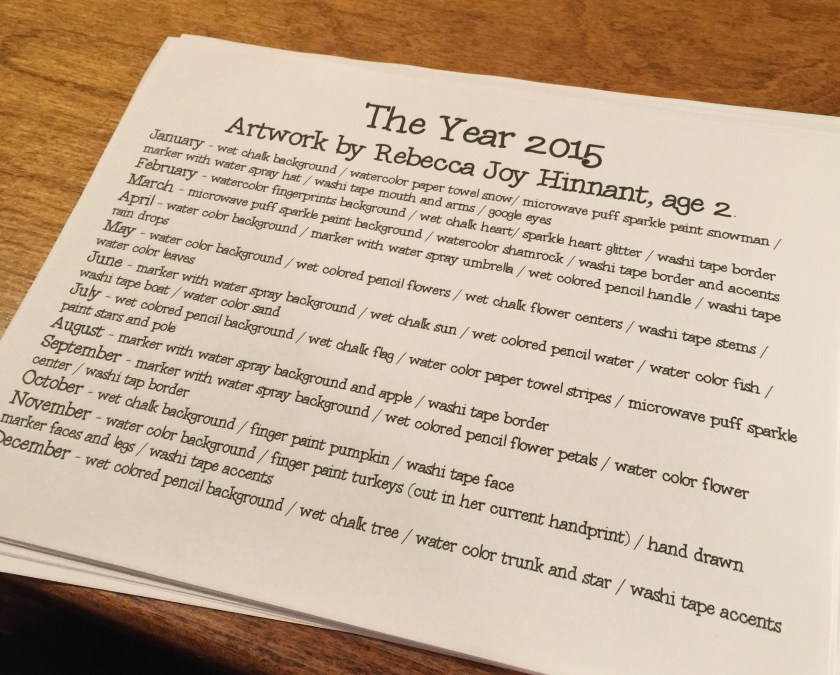
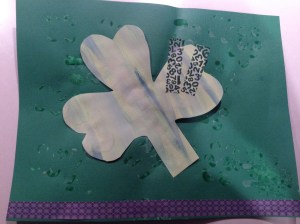
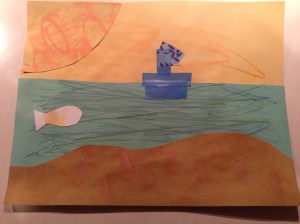
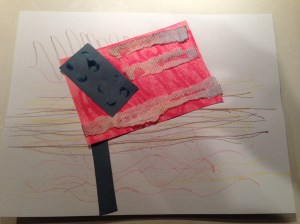
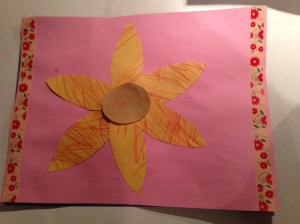
Inspired by artist/author Eric Carle, we did a wide variety of art – painting, chalks, markers, etc on sheets of textured card stock, and then I cut the papers to make a collage for each month.  Becca helped glue the pieces down, and selected Washi tape for each picture.  (She’s a little Washi obsessed… just like Mommy.)  Then, I scanned each picture into my computer, and printed the pictures out on our color printer.  By scanning, I was able to make an awesome cover, which has a preview of each month.  Then I printed out calendar blanks and typed up a sheet that explains what type of art is included on each collage.  I used photo splits to attach the sheets to each other (fronts to backs), then laminated and comb bound each calendar.

Here are some close-up photos to give you some ideas for your 2016 calendar!  Plus, later this year, I’ll share a FREE printable set of 2016 calendar blanks, so you don’t even have to worry about creating those – just start working on your art, and I’ll help walk you through creating this calendar for the important folks in your kids’ lives!

Plus, throughout the year, as we do our art, I’ll give you ideas for how to modify this activity to involve more than one child – so don’t think you have to worry about making a calendar from each child!  There are ways to make some months be a collage of art from each child, and then also making certain months especially just from one specific child in your family (perfect if they don’t share the same birthday month – let them be the star of their own month!)  And yes, baby Grayson will be taking part in making the art for 2016.  (Again, I may be slightly off my rocker… but I think it’ll be worth it in the end!!)

SO – check back next Friday for your first art project… we’re ready to make our February collage, and so are you!  (Yes, we may not do our collages in order… we’re full force excited about Valentine’s Day around here… so we’ve got February done already!)

Please note – due to the fact that the family members who will receive our calendar read my blog, we’ll give you art ideas and show photos of our sheets of painted paper, but will not be posting photos of the finished collages.  Gotta keep something a surprise for Christmas! (And I want you guys to be original in your collage ideas…)  Next January, I’ll be asking for photos of your finished calendars… and feel free to share your photos of completed activities you’ve done inspired by my blog ANYTIME by sending me an email: butterbeesandbumbleflies@gmail.com Please be sure to put on your email if I can share your photos on my Facebook page.


IMG_0593IMG_0595

IMG_0589 IMG_0591   IMG_0590 IMG_0582IMG_0583 IMG_0586IMG_0588 IMG_0585IMG_0581 IMG_0587IMG_0584 IMG_0580