Teaching Self-Regulation

In an attempt to get back to regular posting, I’m starting a new Tuesday Series.  It won’t be necessarily every Tuesday, but my goal is that MOST Tuesdays I’ll be writing about SPD and helping kids that have sensory processing issues, as well as some “From the Heart” type-posts about our own journeys with Becca and the struggles and victories we’ve had.

When I worked on my master’s degree and had a professor who was majorly into brain research that wanted us to do a lot of our own research on the brain and the way kids learn, I was highly intrigued.  But I had no idea how much I would use that information with my own daughter.  God has a way of planning things out for us that we don’t even see or understand until we’re down the road.  I started gaining the head knowledge then of how truly different each individual child is.  I mean, I knew it, because I had experienced it all of my life, but I sort of grew up having an “us” and “them” mentality.  I fit into several different types of “us” groups, and sometimes the people I was grouping myself with mentally were also part of the “them” group in another way.  So I knew we were all different, but it really finally clicked when I became Grayson’s mom.  Having two kids that are so much alike but are truly NIGHT AND DAY different made me finally realize.  Neither of them are anything like ANY child I’ve ever met before.  And I taught a lot of kids.  I babysat a lot of kids.  And that’s when it started to really sink in.  We truly are ALL unique individuals.

And some of us have abilities that others don’t have.  Some of us can smell with our noses.  Some of us can sense the material that something is made from just through one simple touch.  Some of us can hear the smallest change in tone and therefore recognize any musical instrument, or tell you if the ice maker is malfunctioning.  Some of us can take apart something and immediately put it back together – the right way.  Some of us can walk.  Some of us can read a book and retain all knowledge for the rest of our lives.  Some of us… some of us… some of us… we each have special talents and abilities that others don’t have.  It could be viewed that not having a certain ability is therefore a disability.  Or, it could be viewed that having a certain ability that is more sensitive than maybe some others would also be a disability.  I would challenge those who say that everyone is gifted to then also say everyone is disabled.

I’m learning to teach Becca that she is unique.  Yes, she is special.  Yes, medical professionals might look at certain sensitivities or lack of sense that she has and call her disabled.  Yes, educational professionals might look at her IQ and mental capacity and call her gifted.  But the term “disability” and the term “gifted” (or combined, calling her “twice exceptional” or “2E”) don’t define my girl.  She has so many facets that make her who she is- my diamond in the rough.  We’ll be talking about many of those facets in this SENSORY TUESDAY series.

Teaching her to self-regulate is the hardest thing we struggle with daily.  So if you came into this post reading the title thinking I was going to have the magical perfect answer for every parent on how to help their kid self-regulate, I’m sorry for disappointing you.  I believe every child I’ve ever met has some sort of difficulty with self-regulating.  Whether they want to sit in front of a tv for hours and not move, or if they are addicted to sweet junk food, or if they are simply a kid who enjoys not following directions just to get a rise out of mom or dad, self-regulation is HARD.  But it’s an important part of learning how to appropriately live in the adult real world.  So here are some things I do with my sensory child daily to encourage the appropriate growth in this self-regulation area.

  1. I help her regulate her responses to change by giving her warning signals.  We do a lot of counting.  Not the whole “count to 5 or else I’m going to…” But, we count from 60-90 aloud when she is supposed to finish up on the potty.  Or from 30-60 when she needs to finish up brushing her teeth.  Or from 100-125 when she needs to finish up in the bath tub. I verbally clue her in “ok, so we’re going to count from ____ – ____ and then it’s going to be time to____.”  Sometimes she responds with a “no!  I don’t want to.” Which is perfectly normal, but not acceptable.  I begin counting anyway.  If at the end of the counting time she’s decided she’s not going to obey, then we go through whatever discipline is appropriate for the situation.  (I’m not about to coach you on how your discipline your child.  That’s your deal.  Mine is mine.)  I also help her regulate when we are leaving somewhere by counting down from 10.  When we get to 0, we high five each other and “Blast off” to our next location.  I do count down from 10 for behavior issues as well, and it works to give her time to make the correct choice, and when she obeys, she gets to give me a high five at the 0, and I congratulate her on making the right choice.  If she doesn’t obey, we take different measures, which again, are our own.
  2. Another way to help her self-regulate is by having a quiet place available for her.  I wrote a post about that a while back, which you can read here.  If we are away from home, it’s still important sometimes that she have a quiet getaway.  I offer her that opportunity by simply saying “do you need a quiet break?”  She will often take me up on it.  It happens a lot in the grocery store – especially when it’s not our normal time to shop and she is out of sorts with the number of people and the volume of the store (esp since our store is currently undergoing renovations and there are lots of loud construction tools such as electric drills).  She’s now so used to taking a quiet break at the store that she’ll even ask me for one (hello self regulation!!!!).  It’s not always convenient, but I try to make the time to step into a quieter area of the store, hold her head to my chest, and cover her other ear with my hand.  I count slowly in my head to 45, and then I give her a kiss and we move on.  Just taking that moment to step away and let her center herself with the sound of my heartbeat seems to really help her a lot.  Again, it might not work for every child, but for a child with auditory defensiveness, this is HUGE, and helps her to realize that a)I appreciate her verbalizing her needs appropriately b)I acknowledge her needs c)I have supported her needs adequately.
  3. Routine is another great way to establish self-regulation.  Becca is very used to the routine that she watches tv pretty much exclusively in the afternoon after her nap time, and she is allowed to watch three 20 minute shows.  She can choose which they are (she’s on a Magic School Bus kick at the moment), but she knows the routine.  When the second show is over, I tell her “this is the last one” before the third one starts.  She has learned that that’s all.  When we are done, we are done.  And she rarely ever asks to watch another show.  She knows that tv time is done for the day.  That’s just an example of what we do.  Obviously I’m not saying you need to do that in your house, but it’s an example of a routine that she is very used to that helps her to self-regulate in a way that keeps her on track – she is used to the routine, so it doesn’t become a fight, and she isn’t allowed to just indulge so far that she becomes a couch potato.  In the same way, we set a timer when we go outside to play, and she knows that when the timer goes off, it’s time to go in.  Having those routines established helps relieve stress on my part because she knows to expect it so there’s no reason to fight it.

Self-regulation and adaptation is super challenging.  I certainly don’t have all the answers.  But learning to adapt to our surroundings and adequately regulate our needs is a vital life skill that ALL of us have to learn.  The sooner, the better.  I would venture a guess that for sensory kids finding that balance of regulation is much more challenging… So we as parents of sensory kids need to find ways to encourage them when they DO make the right choice, and to help them realize what would be the right choice in the current situation if they’ve missed the mark.

I’ve found that I hear many parents tell their kids “use your words”… But then they just get mad at their child and say “no” or “don’t do that.”  We want our kids to tell us WHY but we don’t tell them WHY.  Granted, I realize that part of obedience is just doing what you are told- with or without reasoning behind it.  But for a sensory kid who can’t see past the fact that they are scared in the current situation, and then mom is mad at me for some reason, they need mom to stop and say “I realize that ____ is probably bothering you, but I need you to do ____ and your choice to not follow my directions is really frustrating me!  We need to ____!  Hurry up!  How can I help you get this done?”  I have discovered with Becca that using words to explain my feelings has caused her to start using words to explain her feelings.  Which is so valuable!!

So, while it doesn’t solve all the problems, I think that giving warning signals, providing an escape, following routines, and parental verbalization of feelings are keys to the many doorways that can block the path to success for a sensory kid.

What works in your family??  Please share!

The DoSeum – A Mom’s Look Inside

This is not an affiliate post – it’s just the honest opinions of a mom who is an annual member of the DoSeum and has visited on MULTIPLE occasions.

DoSeum


This post has been a long time coming… I believe we’ve been to the DoSeum now about ten times.  I consider myself to be well educated on the ins and outs… so here goes!

We’ll get the negatives out of the way real quick – auto flush toilets in a children’s museum are just a crazily stupid idea.  LOTS, maybe even MOST kids are freaked out by auto flush toilets.  Bad choice.  And then there’s the workability of the exhibits.  They’ve been open only since June 1st and in two months time there are already multiple issues with exhibits not functioning properly (for example one of the computer touch screen check-out booths in the Little Town HEB wasn’t working this morning, causing lots of frustration).  But that’s it.  That’s all I’ve got for you in the way of negatives.

So now – for all the things I love love love about the DoSeum!  Let me just start with walking in.  The funhouse mirrors are just that – super fun.  Giggles always start our visit off on the right foot.  I love that there are so many different areas for us to explore – I plan our visit each day so that we explore one specific area, but we always enjoy the front – the mirrors, the pulleys, the big interactive video screen, the wind tunnel (Becca LOVES putting on the butterfly wings and “flying”!!), and the Kaleidoscope.

I love that there are lots of tables both inside and out to eat – and that while we have the option of purchasing food, we can bring our own food.  (Have I mentioned what a picky eater I’m raising… she thinks that going to the DoSeum MEANS eating peanut butter crackers she’s made herself and fruit packed in her lil lunch box.)  Hand washing stations at various heights are readily available as well.

There are two huge outside play stations.  We have not yet played in the sand (my kids honestly don’t know that area exists b/c I have a thing about sand + water + my car…), but they have really enjoyed the water fountain and little river.  They are anxiously awaiting the opening of the giant treehouse (which I think is totally amazing – it’s constructed for handicapped children to be able to join in the play, too with fabulous wide ramps all the way up!!!), and I know they’ll love playing in there as well.

The other outside play station has a giant spider web, log pile, obstacle course that ends in a giant slide, and… a huge water play area.  With water wheels and plenty of places to experiment with the various ways that water moves, it’s just a simply amazing out door play space, perfect for any explorer – from just a few months old to the oldest visitors.

Which is where I’ll pause – Cody and I LOVED our date night – #ReDoRecess, they called it, or #NightAtTheDoSeum – a night just for kids ages 21+ – where we got to have the run of the place!  We had a blast playing all over the place for a couple hours, and are looking forward to the next adults only event!
11811572_1667181053497185_5065488900645456456_nHere we are sitting in one of the incredible outdoor chairs, made from a huge old gnarly tree!  There was plenty of room for both of us!

Taking a step back inside, we explored the spy academy on our date night, and determined that for older kiddos with an extreme interest in spy stuff, and the attention span to go with it, this is an absolutely incredible area!  Perfect for your upper elementary and middle school students, or even older, there are so many activities to do, you could easily spend a couple of hours just inside the spy academy!

Becca’s got a couple of favorite areas, but one of them is definitely the little town.  When we go with our babysitter, we split up – she follows Becca, and I go with Grayson to the baby area.  Then we switch.  Because following Becca around is dizzying!  I love the fact that there is a DoSeum employee at the entrance to this area, so that if she does happen to get away, she’s not going to go far – she can’t leave that area without an adult.  I’ve also been impressed that every time we’ve gone in, the attendant has made an effort to really match us up in his/her mind and also stands next to the strollers and sees which one is ours.  Just that little added sense of security that I really appreciate.  Inside the little town, everything is on a little kid scale – a fabulous grocery store, a trolley, a bank, a restaurant, vet office, construction site, car wash, post office, and airport complete with a boardable/”flyable” airplane that even has luggage and a “TSA” security station!  As a mom, I appreciate all that she learns about the various occupations, and I also appreciate the fact that there are employees and volunteers constantly walking the floor and putting things back in place (esp in the grocery store and restaurant) so that new kids coming to that area can find what they need.  I also love love love the garden in the center for babies.  It’s gated, and has lots of fun sensory activities on the wall, balls and soft toys to play with, etc.  All in all, the little town is fabulous!!

At date night we explored the light and sound area.  We haven’t taken Becca there yet because of her sensory issues with auditory defensiveness and also her extreme overexcitabilities regarding low lighting.  We both had a blast in there, and think she’ll really enjoy the shadow play and light table activities.  We’re looking forward to bringing her to one of the sensory evenings that they have for kids with ASD, SPD, and other sensory issues.  Get this, parents – they have sensory evenings where they provide headphones/earplugs, sunglasses, and have special signage to warn adults about sensory issues that might be found in certain areas.  Lighting is different for these nights (not as dark), and everything caters to our kiddos who have special sensory needs!!!  Isn’t that just amazing?  It’s finally a museum that truly caters to ALL of our kids!

We briefly visited the “Imagine It!” area with Becca, but she wasn’t fond of the sounds there – again, this would be a great place for her on sensory night – but she did go nuts when she saw the room FILLED with books.  Pretty sure she would live in that room if she could!  She’s also enjoyed using the story starter prompts to tell stories, etc.  Definitely so much there for aspiring writers to enjoy!!

And ya’ll, that’s just the downstairs!!!  Seriously – there’s a whole second story!  The engineering section upstairs is just amazing.  Places to build with all kinds of different materials, to test out different materials to see how to make them fly, etc.  And then there’s what Becca calls the “Ball Room” – where balls shoot through tunnels of air directed by different knobs and levers that the kids can adjust.  It can be a super high action, rockin’ place.  I chose to stand by the door (it’s a small enclosed space, which is FABULOUS!) so that she can run and explore and always knows exactly where I am.  She can’t leave without me, and has a tiny tad of freedom to play til her heart’s content.

Also upstairs is a huge social studies area where kids can build mini cities, practice putting a giant foam US puzzle together, learn about energy usage in homes, and explore various info about the continents of our world and view different globes.

Did I mention there’s a set of stairs that make noises when you step on them?  Oh – and a separate glassed in baby play room that’s just for babies?  Impressed doesn’t even begin to cover it.  Glad to be annual members?  Oh yeah.

I’m just not sure what I’m gonna do once school starts and my 12 yr old set of wonderful, helpful hands is back in school and can’t come with us every week to help me wrangle my two lil Explorers!!  (Oh – and get this – I was able to add her to our family annual pass for just $15… and it’s only $11 for a one day admission… talk about a fabulous deal!  We’ve been pretty much every week this summer!)

Ready to plan your visit?  Check out their website here: http://www.thedoseum.org  You won’t regret it!

How To: Creating a Sensory Board for Your Baby Bee

baby bees header

In continuing my series on learning ideas for your Baby Bees… here’s a fun one that your Big Butterflies will be able to enjoy interacting with, as well!  And we’ve found that Sis really loves to show lil Bro how stuff works on his sensory board, so it’s great for all ages, especially if you have kids with Sensory Processing Disorder!

There are LOTS of ideas about how to make a sensory board – Pinterest is overflowing with them!  (Check out a few of my pins on the topic here.)
Snip20150803_7

I think for me, the most important points were size, usability, and cost.  I didn’t want to spend a ton of time and money making something that was going to take a huge amount of space and not be usable for very long.  So I looked at all of my pins and found what I liked best about each of the boards.  And then began to gather my materials.

materials ideas

I was pleased to be able to find most of what I was looking for around the house, and the rest I found at Dollar Tree!  I was really pleased to be able to make such a fun board for literally about $5 out of pocket.  I found the foam board, patterned duct tape to seal the edges, a two-texture sponge, a car wash rag, and some decorative stones at Dollar Tree.  Cody found a few items in his shop for me, and the rest I gathered from inside the house.

sensory board


One of the items I added from Dollar Tree – a star push light – didn’t end up working.  I want to get a touch light from Walmart to add to the board sometime soon.  So here’s what I ended up adding:

I used two wipes packet tops, and inside one I glued (used hot glue for everything) some of that foamy shelf liner (soft and bumpy), and inside the other I glued a piece from a metallic bubble wrap envelope (crinkly and shiny).  I cut off part of the car wash rag – it’s super soft, and has little “fingers” to run your fingers through.  It’s Becca’s favorite aspect of the board.

Cody had a gate hinge in the shop that he wasn’t using, so I glued the left side to the board, and put a velcro dot behind the right side, so it will actually hinge open, and makes a cool sound while doing so.  A scrap block of wood, also from the shop, makes a great knocking sound, and is hard and smooth.  Another item from his shop that the kids love is the gate lock.  It’s super fun to lift it up and down and make it rattle.

The decorative stones I got from Dollar Tree are great for introducing patterns – both in color and texture, and have been a great way for Becca to learn the difference in see-through and opaque.  A piece of a plastic sink drain mat is fun to rub your fingers across, because not only does it have little bumps all over it, it also has little square openings that allow you to feel the foam board backdrop as well.

The sponge is fun to play with – I just cut it in half, and was able to allow the kids to play with both sides – smooth and scratchy.  And of course, since it’s a sponge, it’s fun to punch, push, and press.  I threw on some feathers for good measure, and then two pouches: one that zips, and one that is velcro.  The velcro pouch has ten large pretend “gold doubloons” left over from Becca’s first birthday party ages ago, and the zipper pouch is super fun because I took a piece of cording Cody had in the shop, and hot glued it inside with a ring of keys attached!  So Gray can practice opening the zipper, taking the keys out, play, and then put them back in and zip it up!

I seriously spent about $5 on this board.  Then found a good height in our family room and nailed it to the wall.  Super simple, basic… nothing fancy or expensive.  Nothing too time consuming to make.  Yes, it took a little planning and forethought, but I can see this board being something they play with for the next couple of years – even though Becca is older, it’s fabulous for her need for proprioceptive input (SPD)… and when they are done, if it’s still in good shape, I can pass it along to a friend with young kids who can put it to more good use.  If not, I throw it in the trash and know that I got more than my money’s worth!

Have you created a sensory board for your Baby Bees/SPD Adventurers?  I’d love to see your ideas and add them to my pin board for others!  Please share links in the comments!!

Custom Penpal Art Cards

Yeah, this post totally isn’t a normal Wednesday “From the Heart” post, but since I intended to have it post yesterday and didn’t get it finished, I decided to just do it today!  Enjoy!
A few years back, I came across an Etsy shop that looked neat.  What has happened since then is nothing short of a love affair with cards.  I’ve always been fond of custom cards, and I enjoy scrapbooking and styling my own cards occasionally.  But printed cards have never been within my realm of expertise.  Enter Jessica Bates, from Jack and Ella Paper Press.  
10171242_708295029239776_6808279950453688934_n
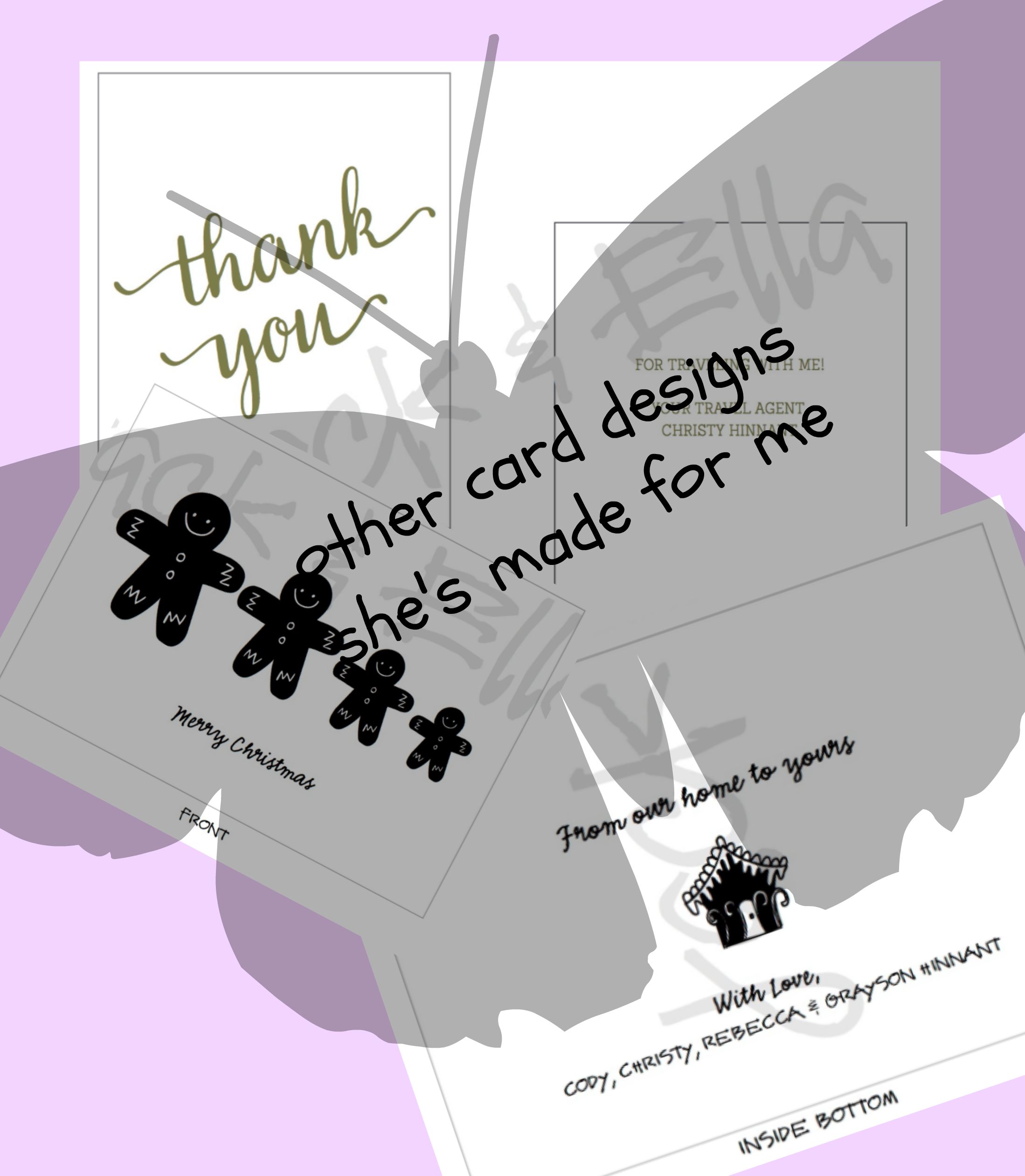
Over the past several years, she has designed custom Christmas cards for our family, has created an entire custom line of “thank you” stationery for my travel clients to meet a variety of needs, and now this- all to my design specs.  She’s talented, sure… a mind reader?  Most definitely!!!  I can send her my ideas and somehow it’s like we’re on the same brain wave length.  It always turns out perfect.
other cards
This project was no different.  I wanted Becca to be able to start writing to friends and family – via mail.  Granted, she could have done so on construction paper, but I thought Jessica would be perfect for this project, and she was!  (We’re already discussing modifications for additional cards!)
So I wanted a big circle on the front.  Becca normally creates her art on a blank paper.  I wanted to see how many different places she could go with a circle.  (We’re contemplating triangles and squares coming soon!)  I also knew that to begin, I’d be writing.  But soon, she’ll be writing more on her own and she’d need plenty of space, and some guidelines for her words.  I drew up my design idea and sent it over to Jessica, who of course made it better than I could have imagined!  I love that they are of heavy paper so she can do any type of art she likes- acryllic, glue, watercolor, anything.
penpal art
For her first two cards, Becca chose to paint with acryllics.  She made a sprinkle donut and a butterfly.  She wanted me to help make zigzags on the butterfly wings and make the sun, so I held her hand.  She did the movements herself- she has much more talent for hand movements than she realizes.  We let them dry, and the next day we sat down to write our messages.
We talked about our two penpal families, where they live, how many kids they have, etc.  She decided which design of card needed to go to which family, and told me what to write to them.  We talked about letter structure- how if we want them to write back, we need to not only tell them something, but ask questions to learn more about them and show that we care.  She was very good at coming up with questions!  Then she had me help her draw a heart for her salutation, and she wrote her name on each card.
I showed her the parts of the envelope, and we discussed where the recipient address goes, where our address goes, etc.  She stuck the stamps on, and then added some stickers for a little added Becca flair.  She was super excited to mail her cards and she’s anxiously awaiting her penpal notes back.  She already has ideas for more cards she wants to make and send to more people.  So I don’t think we’re anywhere near the end of Project Penpal!
Have you done penpal projects with your kids?  If you’re interested in having some custom penpal cards like these for your kiddos, be sure to contact Jessica and I know she’ll be glad to hook you up!!  (Fyi, she’s not paying for this “ad” in any way… I’m just writing this simply because I love her work and know you will too!!)
Be sure to let her know you heard about her from Christy, and that you are interested in some penpal cards!

Cardboard Boxes

When Becca and I had our recent discussion about what things she’d like to learn, she mentioned wanting to know how boxes are made.  And since then, she’s mentioned it several times.  So I thought I’d share what we did in case some of your kiddos have the same questions!

First, I set up a new “How it’s Made” Playlist on my YouTube channel, so you can click over there to check out several fabulous “How it’s Made” video clips that you and your kids will enjoy learning from!  We watched the cardboard box video probably a total of 5 times – she kept not remembering certain parts or wanting to re-watch because she had questions still.

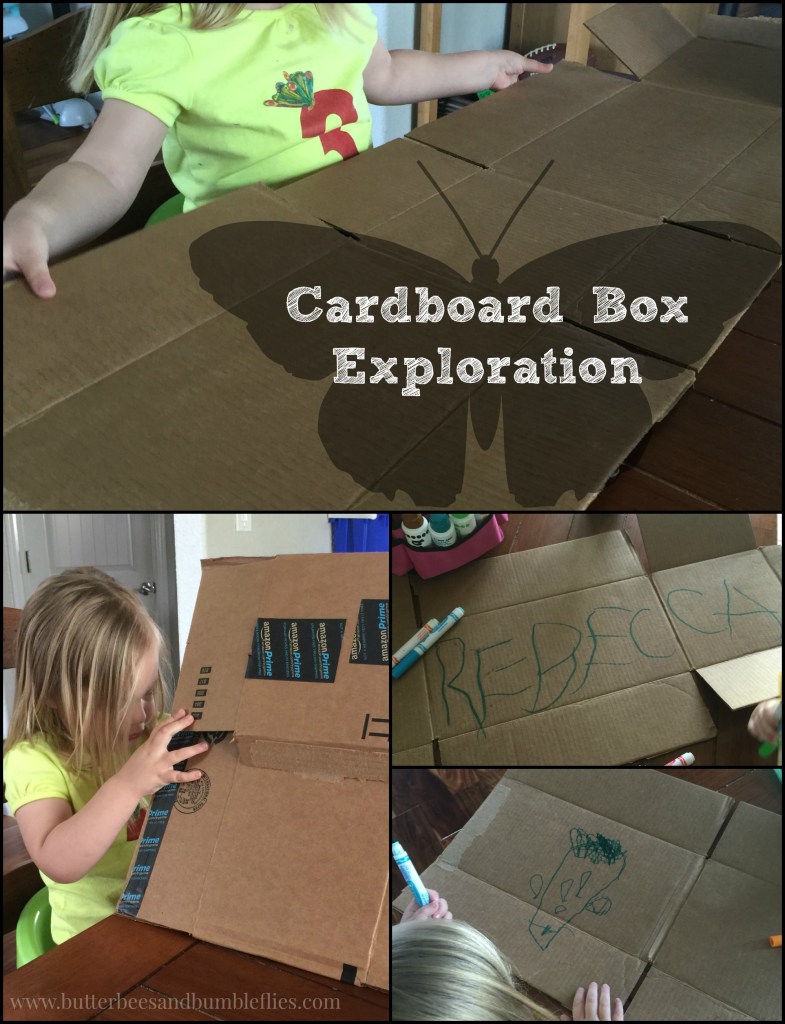
cardboard box explorationThen, we took a regular cardboard box from our recycling pile, and took it apart.  We found where the seam was, and “unglued” (her word) it.  Then, she enjoyed decorating the inside with some custom artwork, and she helped me re-glue the box back together – inside out.  We used a little tape to help the glued flap stay closed.
diy cardboard

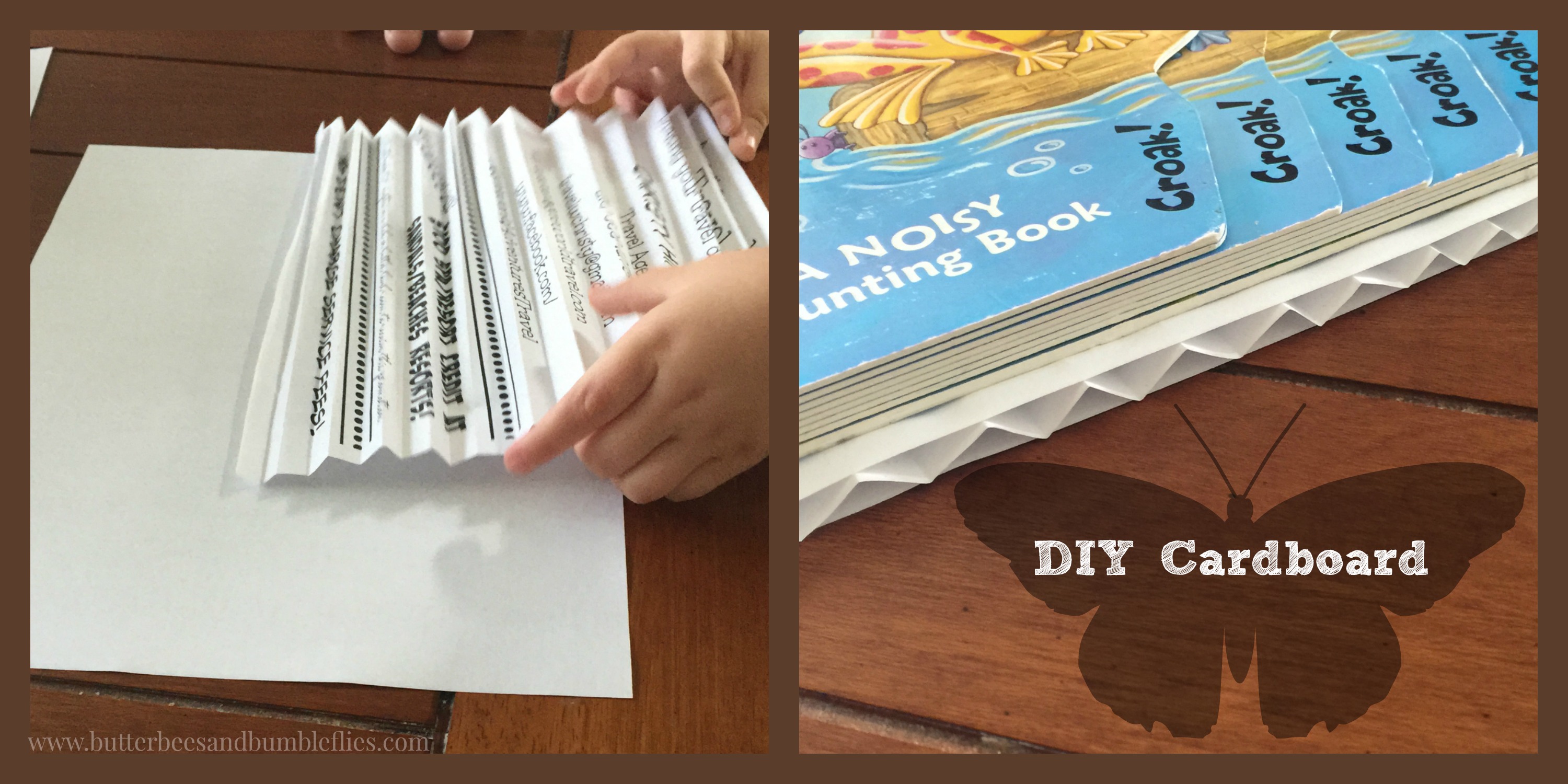
With Daddy’s encouragement, we took it a step further, and made our own cardboard!!  She was most fascinated with the process of making the cardboard itself, so he suggested getting three sheets of paper and making our own!  She wasn’t able to make the “fluting” by herself, so I did that part, and then she enjoyed adding the glue and sticking each sheet on.  We set a book on top of it for it to dry, and she was AMAZED when it was dry at how strong those three once-flimsy pieces of paper were!!  It was a great experiment, and I’m glad he encouraged us to take it a step further.

She really learned a lot from this lesson, and when I asked her if she felt like she adequately had had her questions answered she replied with a hearty “yes, I did!”  Mission Accomplished.